
Bringing a baby home is joyful and demanding. In the weeks after birth, a mother’s body is healing, adjusting to new hormones and, if she is breastfeeding, making milk around the clock. Food is one of the few things within her control, and Indian kitchens have a long tradition of using it well.
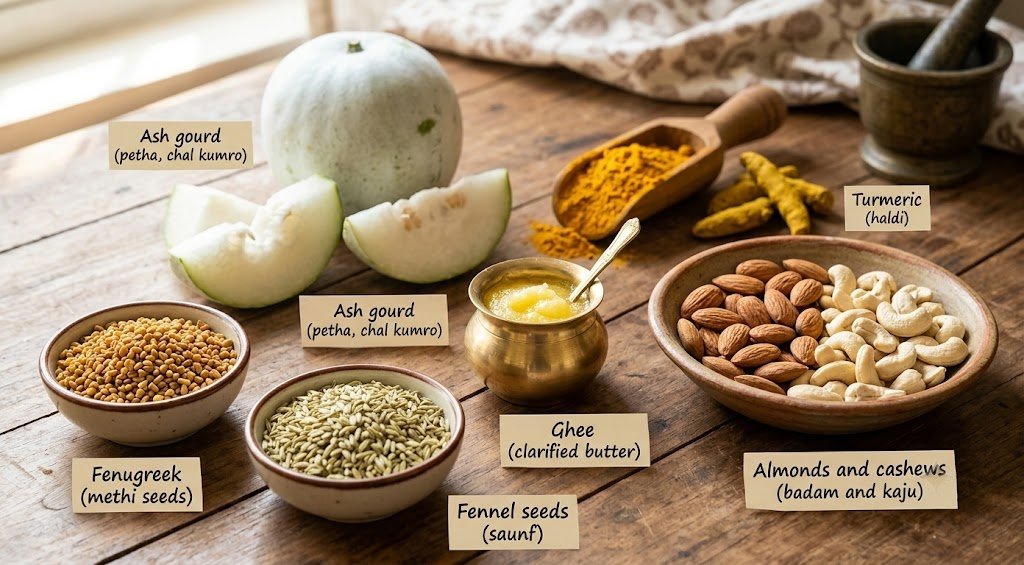
This guide covers six foods that Indian families have served to new mothers for generations: fenugreek, fennel, ghee, ash gourd, almonds and cashews, and turmeric. For each one you will find what it offers, how to use it and what to keep in mind. A sample day of meals and answers to common questions follow.
Traditional foods support recovery; they do not guarantee more milk. Supply depends mostly on how often and how well the baby feeds. If you are worried about your supply, speak to your doctor or a lactation consultant.
Why nutrition matters after birth
The post-birth period is about rebuilding, not only healing. Many new mothers also manage it without a large family around to cook and care for them. In these weeks the body needs:
- Iron, protein and enough energy to recover from delivery
- Healthy fats and plenty of fluids to support breastfeeding
- Regular, easy-to-digest meals to keep energy steady through broken sleep
- Vitamins and minerals for immunity and healing
A varied diet of home-cooked food covers most of this. The foods below add traditional, time-tested support on top.
Six traditional Indian foods for lactation and strength
1. Fenugreek (methi seeds)
Fenugreek is a kitchen staple and the most common traditional food for supporting milk supply. The seeds also provide iron and fibre. Studies on its effect on milk production are small and the results are mixed, so treat it as a gentle helper, not a cure.
- How to use: Soak one teaspoon of seeds overnight and drink the water in the morning, or add lightly roasted seeds to dal and sabzi.
- Keep in mind: It can cause gas or loose stools and may lower blood sugar. Check with your doctor first if you have diabetes or take regular medicines.
2. Fennel seeds (saunf)
Saunf is traditionally used to ease digestion and bloating, which many mothers feel after delivery. It is lightly sweet and aromatic, and families have long given it to nursing mothers.
- How to use: Boil one teaspoon of seeds in a cup of water for five minutes and sip after meals.
- Keep in mind: Stay with small kitchen amounts. Large quantities of fennel tea are not advised.
3. Ghee (clarified butter)
Ghee is a healing food in Indian homes. It gives dense energy and carries the fat-soluble vitamins A, D, E and K, which helps when appetite is low and meals are small.
- How to use: Add a teaspoon to a tablespoon to dal, roti, cooked vegetables or warm milk, as your doctor advises.
- Keep in mind: It is calorie-dense. Ask your doctor if you have high cholesterol or other heart-health concerns.
4. Ash gourd (petha, chal kumro)
Ash gourd is light on the stomach and mostly water, which makes it a gentle way to stay hydrated while breastfeeding. Bengali kitchens call it chal kumro. It is not the same as lauki (bottle gourd).
- How to use: Cook it as a soup, or as a mild curry or dal with light spices.
- Keep in mind: It is a supporting vegetable, not a protein source, so pair it with dal, paneer, eggs or fish.
5. Almonds and cashews (badam and kaju)
Nuts give protein, healthy fats and vitamin E, along with magnesium and some calcium. A small handful makes an easy snack between feeds.
- How to use: Soak four to five almonds overnight, peel and eat them in the morning, or blend them into a smoothie or warm milk. Eat cashews as a small handful.
- Keep in mind: If nut allergies run in your family, check with your paediatrician first.
6. Turmeric (haldi)
Turmeric contains curcumin, which has anti-inflammatory properties. Warm turmeric milk (haldi doodh) is a long-standing after-birth drink in many Indian families.
- How to use: Stir a pinch of turmeric into a cup of warm milk with a little honey.
- Keep in mind: Kitchen amounts are fine. Do not take high-dose turmeric supplements without your doctor’s advice.
A sample day of post-birth meals
You do not need a strict plan. This is one easy pattern of small, frequent meals that works with the foods above.
| Time | Example |
| On waking | Warm water, with soaked fenugreek seeds if your doctor agrees |
| Breakfast | Vegetable poha or besan chilla, and a glass of warm milk |
| Mid-morning | Soaked almonds and a seasonal fruit |
| Lunch | Rice or roti, dal with a little ghee, ash gourd curry and curd |
| Evening | Fennel water and a small handful of cashews or roasted makhana |
| Dinner | Light khichuri with ghee and a vegetable, or roti with paneer or egg curry |
| Bedtime | Warm turmeric milk |
Balanced diet tips for new mothers
- Include protein at most meals: dal, paneer, eggs, fish or lean meat.
- Choose whole grains such as brown rice, chapati and oats.
- Keep water within reach and drink often, especially while feeding.
- Eat small, frequent meals so energy stays steady.
- Keep tea and coffee modest, and do not skip meals when the baby is fussy.
How Kacher Lok supports your post-birth journey
Good food needs time and energy, and both run short in the first weeks. At Kacher Lok, our trained and verified caregivers help families in Kolkata with newborn care, light household chores and meal support, so mothers can rest, eat on time and bond with the baby.
- Learn what a trained Japa Maa does in the first 40 days.
- See how to choose a newborn care specialist in Kolkata.
- Need help in the kitchen? Read about hiring a cook in Kolkata for healthy eating.
- Not sure what kind of help you need? Compare an aya, a nurse, a maid and a babysitter.
To arrange support at home, see our New Born Care / Japa service.
Frequently asked questions
Does fenugreek really increase breast milk?
The evidence is mixed. Some mothers find it helpful, but frequent and effective feeding matters far more. If you are worried about supply, speak to your doctor or a lactation consultant.
When can I start these foods after delivery?
Many families start gentle foods such as ghee, fennel water and turmeric milk in the first days. Timing depends on your delivery and recovery, so ask your doctor before adding fenugreek or larger amounts of ghee.
Are these foods safe if I have diabetes or high blood pressure?
Fenugreek can lower blood sugar and ghee is calorie-dense. Check with your doctor before using either regularly.
How much water should a breastfeeding mother drink?
Drink whenever you feel thirsty, and keep a glass of water beside you at every feed. Pale urine is a simple sign that you are drinking enough.
Can a caregiver help with meals after birth?
Yes. A trained caregiver or cook can prepare simple meals while you rest.
Final thoughts
Traditional Indian foods are gentle allies for recovery and for breastfeeding mothers. They work best alongside rest, regular medical check-ups and reliable help at home. A balanced post-birth diet is not a luxury; it is part of recovery, and with the right food and dependable support, every new mother can feel stronger and more confident.
This article is general information and not medical advice. Always speak to your doctor, dietitian or lactation consultant before changing your diet, especially if you have a medical condition or take regular medicines.